
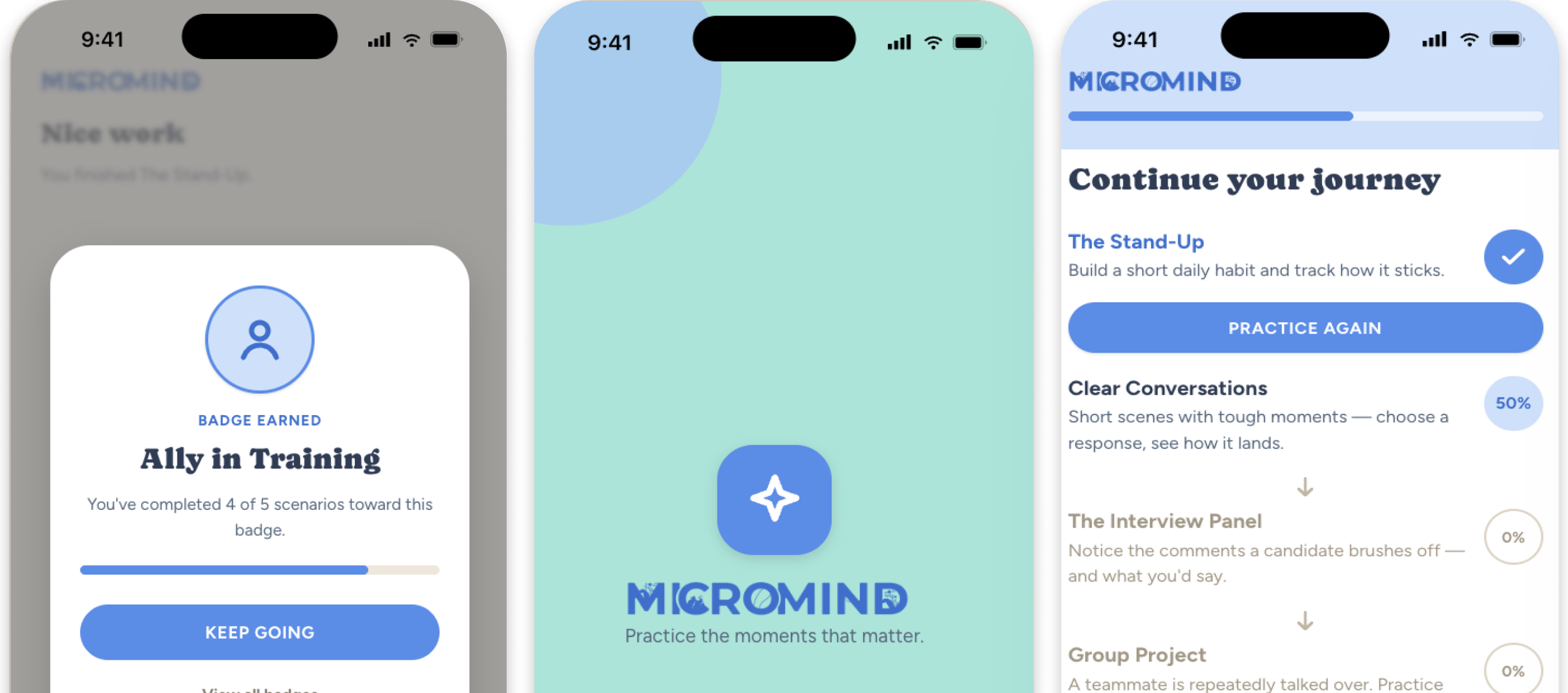
CASE STUDY
Micromind: an inclusive learning concept
Visual & UI Design (owned) · Learning scenario flow (contributed) · Team of 4 · Graduate coursework, Harvard Graduate School of Education
A concept for a scenario-based learning experience that helps people recognize and respond to microaggressions through low-pressure, narrative-driven practice. Built as a graduate team project at Harvard.
PROBLEM
Microaggressions are subtle, normalized, and hard to name. Conventional training can feel abstract or judgmental, which makes people defensive instead of reflective.
INSIGHT
Testing early prototypes with classmates, I saw people stay open when a scenario felt like a story to move through, not a test to fail. Emotional safety kept them engaged.
DECISION
I owned a warm, rounded visual system to lower defensiveness and shaped the scenario flow so each step held together as a narrative.
SCOPE
A design concept, not a shipped product, tested informally with peers. The work was the system, the interface, and the narrative structure.
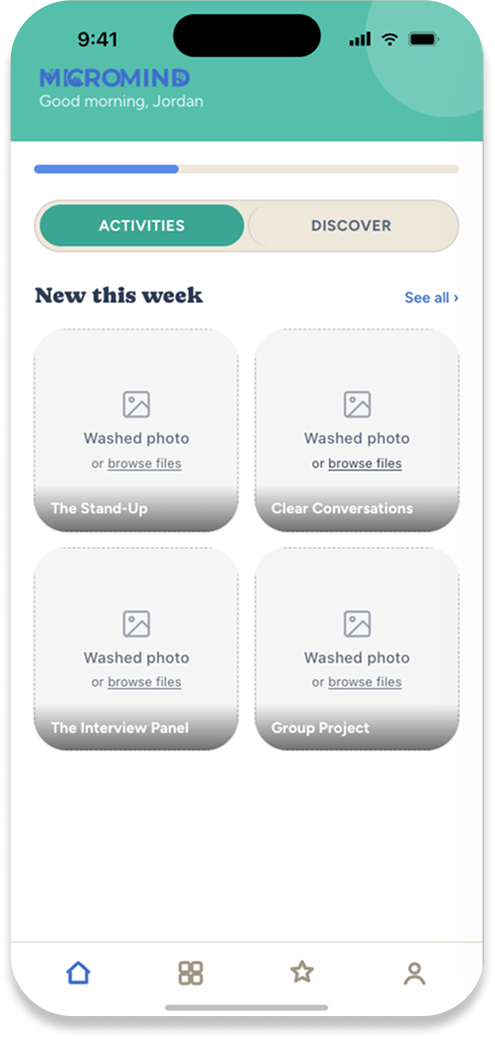
FLOW MAP
The scenario sequence, mapped end to end. Each screen had to earn the next one, so a learner moves through discomfort in a shape that feels like a story rather than a test.
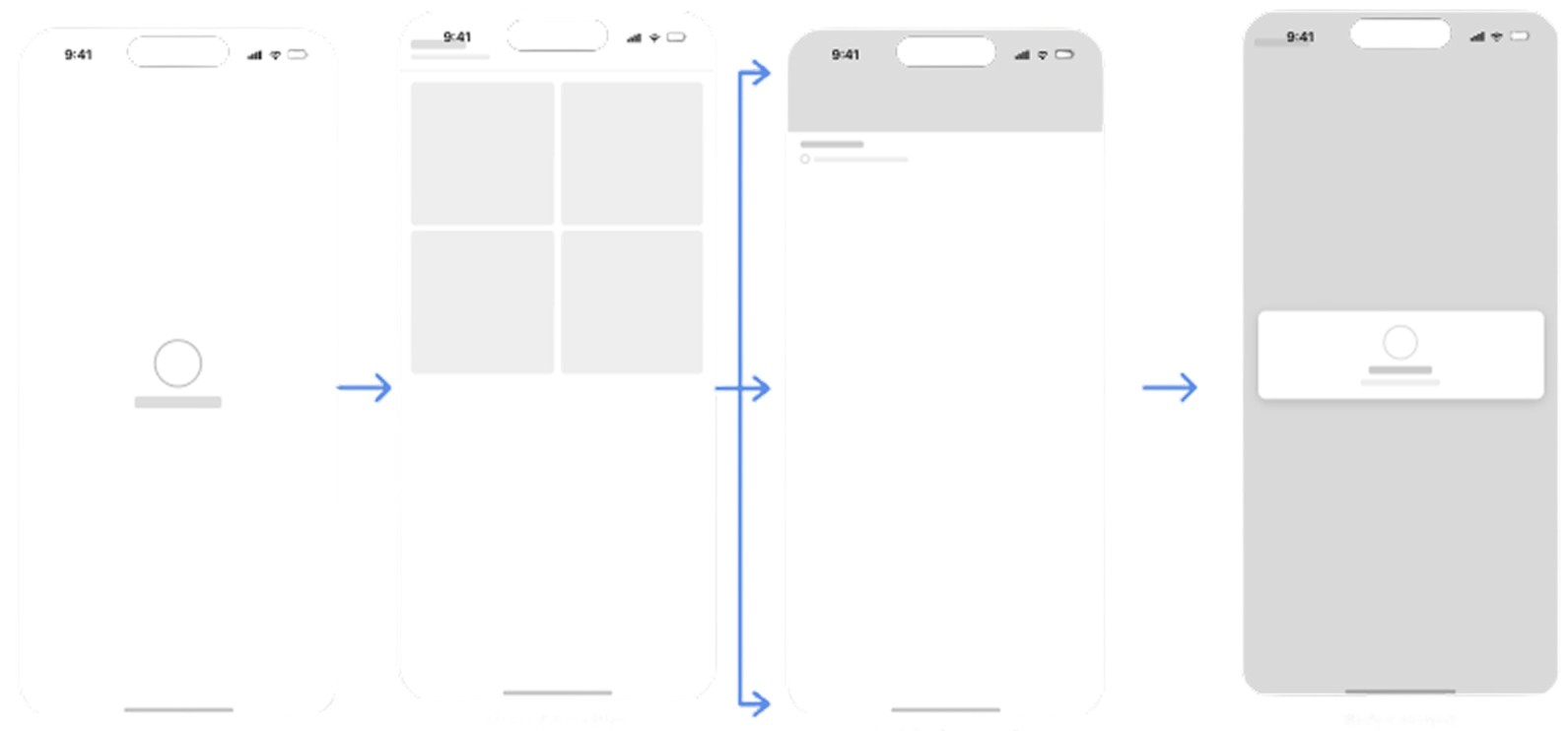
01 · Entry
Opens low-stakes and oriented. Before anyone engages with uncomfortable material, they need to know where they are and that nothing is being scored.
02 · Activity grid
Choice comes before content. Letting learners pick their entry point gives them agency, which lowers the defensiveness that shuts down learning on this topic.
03 · Scenario
The practice itself. One situation at a time, in narrative form, so the learner is reading a moment rather than being quizzed on a definition.
04 · Reflection
Closes the loop. Recognition without reflection doesn't stick; this is where a moment of practice becomes something retainable.
Design Tokens
THE SEAM, LIVE
Warmth wasn't a style choice. Rounded, friendly components lower defensiveness, so learners stay open while handling uncomfortable material. A visual decision, made for a learning reason. That's the whole thesis in one project.